

Car Boot Sale Tips to Sell More
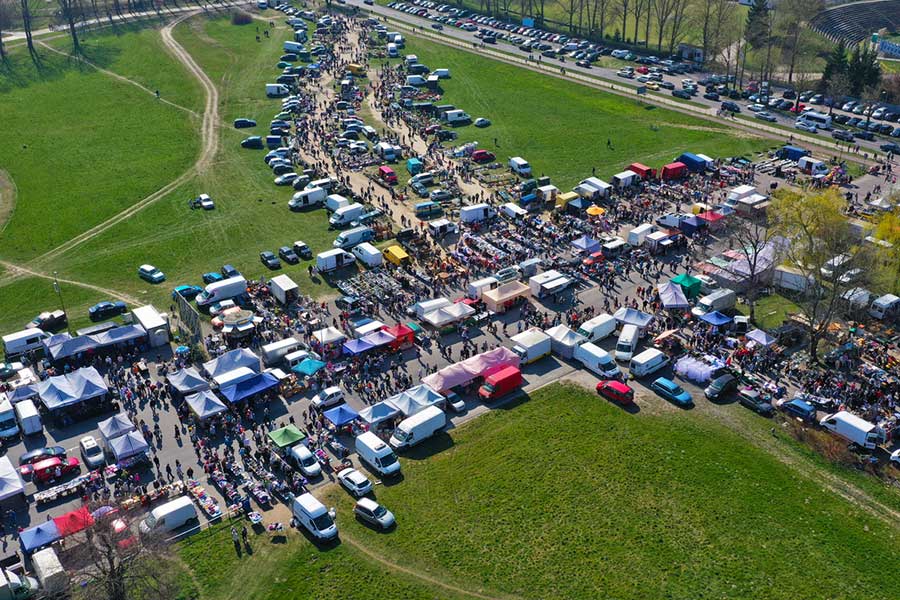
It’s nearly Spring! Longer days, brighter skies, (hopefully) better weather are all just around the corner, and you might be inspired to declutter your home and have a good old-fashioned spring clean.
If you’re planning to get rid of lots of belongings you don’t use or want anymore, your first thought might be to use one of the online selling platforms like Vinted or eBay. Those are great, but items can take days, weeks or even months to sell: if you want the bulk of your clutter out of the house sooner rather than later, you might be wondering how to sell things at a car boot sale.
The humble car boot sale has been a staple of British weekend life since the late 1970s: a more modern, more mobile version of flea markets or jumble sales. If this is your first time selling, you’ll be competing alongside veteran booters - so here are our top tips on how to make the most money and sell the most of that clutter!
Decide what to sell
Think about this from the buyers’ perspectives. If a person wants to buy a specific item, they’ll probably browse online, or nip to their local shop. People who are shopping at a car boot sale are there to buy things that catch their eye - things they didn’t know they needed or wanted. They want a bargain, and they want something that’s in good condition.
What sells best at car boot sales?
The items that people are most likely to buy at car boot sales are things that want to see and touch in person before they buy.
Practical items like books, children’s toys, CDs / DVDs (yes, people still buy those) and accessories like belts or even plant pots and garden tools are more likely to sell.
If you have young children and have baby items in the loft that you won’t use again, high chairs, cots, prams, baby carriers, bottle sterilisers and baby clothes all sell well at car boot sales. Selling them to expectant parents or to grandparents is a nice way to say goodbye to those baby goods, knowing they’ll be going to a home where they’re needed.
Clothing can sell well (see below on how to display clothes at a car boot sale), as can shoes and jewellery.
Ornaments, picture frames and artwork are a bit hit and miss - taste in decor is, of course, subjective and it will depend on the day whether there’s anyone there who likes what they see.
Remember that everything you want to sell needs to be clean and in good condition or it definitely won’t sell.
If you have clothes and other fabrics that are stained or damaged, pop those into a clothing recycling bank instead. If you have items that you think won’t sell well at a car boot sale, but could still be useful to someone, consider donating them to charity or taking them to your local recycling centre to avoid them ending up in landfill sites.
Think about your prices, and keep a note of them
Car boot sales are not about making a lot of money on a few items, they’re about making as many sales as you can. Selling 10 items for £1 each is more achievable than selling 1 item for £10.
To decide how much to charge, just have a look at typical prices online for secondhand goods like the ones you’re trying to sell. Or, if you know how much you paid for the item(s), a good rule of thumb is to charge 10% of what you paid.
Most items at car boot sales don’t have price tags. That’s because people who go to car boot sales like to haggle and will start by choosing something they like the look of and asking how much it is. Just keep a list handy of what you’re selling, next to a note of how much you’ll ask for each item, and how much you’ll settle for if you’re haggled down.
If you prefer, you can group items into price brackets. If you’re displaying your items on a table, you could put a big label in front of each group of sale items with a price bracket (e.g. “Items on this table, 50p - £1”; “Items on this table, £1 - £5 each” or whatever price brackets suit your items). This might tempt people to ask with a bit more confidence about each item, knowing that it’s within their budget. You can then haggle with them until you agree a price for the item they’re interested in.
Gather your supplies
If you’re selling a large number of smaller items, it’s worth taking a trestle table (or any kind of fold-up table you can fit into your car - you might have a garden table, camping table or a wallpapering table you could use). Alternatively, take a tarp to spread on the floor outside your car to display your items.
It’s helpful to have a stack of plastic bags to give to buyers with their purchases - as an added bonus, this is a great way to declutter your house of all those plastic bags you’ve probably got stashed in drawers and cupboards!
You’ll also need a lot of change, as most buyers will have brought cash. It might be worth buying a card reader, to take card payments - but only do so if you’re going to do this regularly and you’re certain that you’ll be able to use the internet signal from your phone to make it work. Many car boot sales are held in fields and fairly remote locations, so check that you can get a signal before you invest. Most buyers will expect to have to pay in cash, but a few might be persuaded to spend a bit more if they can pay by card.
Decide how you’re going to display everything
To display clothes at a car boot sale, a clothing rail is ideal - make it look smart by using matching hangers if you have any, and hanging them so that the hooks all point the same way. Clothes can also be folded neatly (there are plenty of videos online showing you how to fold clothes to look like those on display in the shops) and laid out on your table / tarp.
However you’re going to display them, it’s important to remember that people buy clothes by size, and then by colour. Separate your clothes into types - tops, jeans, coats, shoes etc. Then group them into sizes: mark the sizes clearly so that they can be seen at a glance. If you have space, try to organise the clothes into colours (e.g. all the greens together, blues together etc).
Other items should be laid out carefully and neatly spread out. You could make your table look more enticing by putting out a bowl of wrapped sweets / chocolates, or draping a string of battery-powered fairy lights around your table or open boot. If you have any soft toys, put these at the front so they’re sure to catch the eye of passing children!
Are you going to sell mystery bags?
Mystery bags or packages are becoming quite popular - wrap up a few random items that you’d be happy to sell for a round price like £5. Use brightly coloured wrapping paper or use gift bags (if you have some in your house from gifts others have bought for you in the past), put them in a big box or basket and label them with a sign saying “Mystery bags, £5 each”. You could do a discount offer, e.g. “2 for £7, 3 for £10” to encourage more purchases.
These items need to be worth at least what you’re selling them for, because the buyers don’t have any haggling power. If they take a risk and spend £5 on a mystery bag that contains a pair of old socks, they’re not going to be pleased. If, however, they spend £5 and get items they would have paid maybe £7 - £10 for, they’ll be pleased and tell others about it.
Mystery bags are a great way to sell a lot of items at car boot sales, especially items that you think won’t sell very well on their own (things like picture frames or vases), or children’s toys.
Check the start time and arrive early
The car boot site will open to sellers first, and then buyers. There is likely to be a queue of cars waiting to get in and set up their car boot / trestle tables, so aim to get there as early as you can manage. This is probably the part that puts most people off car booting - who on earth wants to get up at silly o’clock on a Sunday? But, just as the early bird catches the worm, the early car booter gets the best spots and has time to eye up the competition before the punters arrive!
Keep your eyes peeled
Unfortunately, thefts are not uncommon at car boot sales. While your attention is on your paying customer, someone else might be helping themselves to your items at the other end of your stall. Take a friend or relative with you to keep an eye on everything, and keep valuable items in the centre of your table where you’ll be spending most of your time.
After the car boot sale
By late morning, most buyers will have already spent all the money they planned to spend. They might be willing to pay a few more pence or pounds for some last-minute bargains on their way out, if the price is right, so this is a good time to decide whether to drop your prices (just to get rid of your remaining items) or face having to take things home with you again.
Now that you’ve done your first car boot sale, you’ll have some confidence and experience under your belt - you’ll have seen what people have been willing to buy, and how much they’ve been willing to spend. This could help you decide what to do with your unsold items and after future declutters.
You could either try to sell your unsold items online, or hang on to them and try to sell them next week or next month at the next car boot sale. The last thing you’ll want to do is take them back home and put them away, undoing all your hard decluttering efforts! So, while you wait for those items to sell online, or while you wait for your next car boot opportunity, you could store your excess belongings in a self storage unit.
We have units ranging in size from 10 sq ft (about the size of a car boot!) to units the size of a shed, a large room, or a warehouse! You can rent your unit for a couple of weeks at a time, and add or remove items whenever you like during our extensive opening hours - we’re open every day, all year round. If you want to collect your items early in the morning to get set up for your next car boot sale, many of our stores can be accessed 24 hours a day if needed.
If you’d like to know more about our locations, prices and special offers, please get in touch and our friendly team can give you all the information you need, with no obligation or pressure.
